A Simple Trick to Snap Away Stress (Backed by CBT)
Why Stress Feels So Hard to Catch
Stress doesn’t usually hit all at once.
It builds quietly.
You’re sitting at your desk…
scrolling your phone…
thinking about something small…
And then suddenly:
your shoulders are tight
your breathing is shallow
your mind is stuck in a loop
By the time you notice it, you’re already deep in it.
That’s what makes stress so hard to manage.
A Simple Trick to Snap Away Stress
There’s a surprisingly simple trick people use to interrupt that moment:
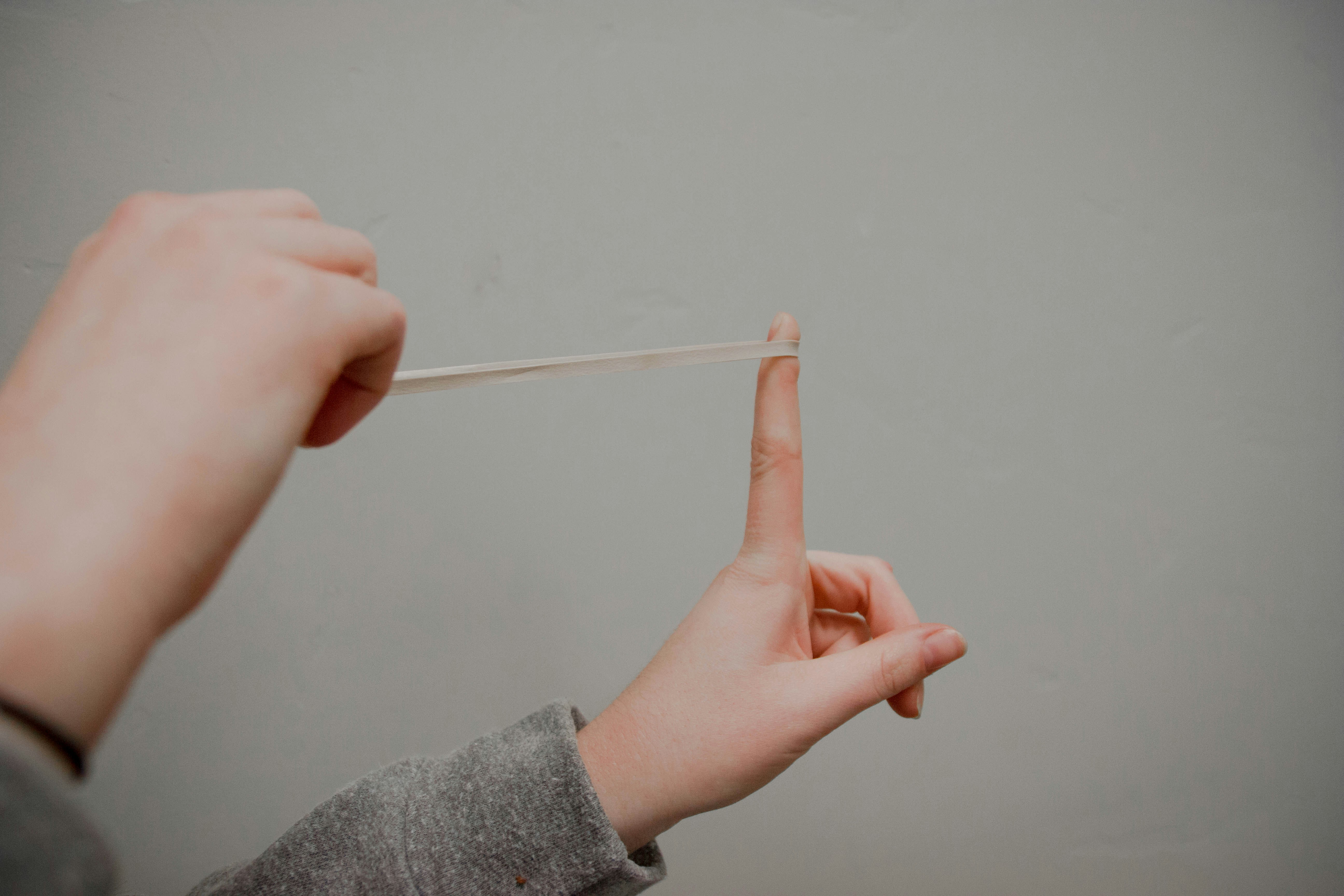
👉 A rubber band on your wrist
When you notice stress or overthinking starting, you gently snap it.
Not to hurt yourself,
but to snap yourself out of the loop.
It sounds almost too simple.
But there’s a real reason it works.
The Psychology Behind It (CBT Explained Simply)
This technique is rooted in Cognitive Behavioral Therapy (CBT) - one of the most widely used approaches for managing anxiety.
CBT is based on a simple idea:
👉 If you interrupt a thought pattern, you can change how you feel.
Stress often follows a loop:
A trigger (work, phone, uncertainty)
Automatic thoughts
Physical tension
More anxious thinking
The rubber band acts as a pattern interrupt.
It breaks the loop just long enough for you to become aware of what’s happening.
And that awareness is everything.
Why “Snapping” Works So Well
Stress lives in your mind, but it shows up in your body first.
That’s why physical techniques for anxiety relief are so effective.
A small physical sensation:
pulls you out of autopilot
shifts your attention to the present
interrupts the spiral of thoughts
In that moment, something changes:
👉 You go from lost in thought → aware of yourself
And once you’re aware, you have a choice.
How to Use the Rubber Band Trick (Safely)
If you want to try it, keep it simple:
Step-by-step:
Wear a soft rubber band or bracelet on your wrist
Notice when stress or overthinking begins
Gently snap the band (no pain or harm)
Take a breath and acknowledge the moment
You can even say to yourself:
“I’m starting to feel stressed”
“This is just a thought”
Important:
❌ Don’t use it to punish yourself
❌ Don’t snap hard
✅ Use it as a gentle reminder to come back
Think of it as a reset button, not a reaction.
The Limitation of Simple Tricks
The rubber band works.
But only if you remember to use it.
And that’s the problem.
Most stress doesn’t feel obvious at first.
It builds in the background—quietly.
By the time you notice it:
👉 you’re already tense
👉 already distracted
👉 already reacting
So the real challenge isn’t the technique.
It’s awareness.
A Smarter Approach: Mindful Reminder Instead of Manual Tricks
This is exactly where tools like Miratick come in.
Instead of relying on you to catch stress in the moment,
your Apple Watch helps you notice it automatically.
With mindful reminders and gentle nudges, Miratick:
Detects subtle changes in your body
Sends a nudge when stress is rising
Helps you pause before the spiral starts
It’s like having a continuous version of the rubber band trick
without needing to remember it.
Instead of snapping yourself back…
you’re gently brought back.
Final Thought: Awareness Comes First
Most people try to fight stress with willpower.
But that rarely works.
Because you can’t change what you don’t notice.
Whether it’s:
a rubber band
a breath
or a mindful nudge from your watch
The goal is the same:
👉 Notice the moment before it takes over.
Because once you notice…
You can choose something different.
FAQs
Does the rubber band trick help anxiety?
Yes, it can help interrupt anxious thought patterns by creating a physical cue, which aligns with CBT techniques.
Is snapping a rubber band safe?
It’s safe if done gently. It should never cause pain or injury.
What are other quick stress relief techniques?
Grounding exercises, deep breathing, movement, and wearable reminders like Miratick are all effective options.
Is this a CBT technique?
Yes, it’s based on principles from Cognitive Behavioral Therapy (CBT), which focuses on interrupting negative thought patterns.